AI & Automation for Impact-Driven Companies

Stop losing hours to work your systems should do

I build automation and AI systems for mission-driven organisations — eliminating manual reporting, disconnected tools, and repetitive admin so your team can focus on the work that actually moves the mission forward.

No jargon. No hard sell. Just a conversation about your challenges.

Sound familiar?

Impact organisations face the same operational pain points. They're all solvable.

The spreadsheet held together with hope

Critical data lives in spreadsheets that break when anyone changes a formula, and only one person knows how they work — and the formula logic lives in one person's head.

The onboarding that takes two weeks

Getting a new volunteer, client, or partner through your process involves emailing back and forth, chasing signatures via email, copying details into your CRM, and hoping someone remembers to add them to Slack.

The tool stack nobody chose on purpose

Notion, Google Sheets, Mailchimp, Airtable — none connected. Staff copy-paste between them daily.

The AI question mark

Everyone's talking about AI but nobody's shown you what it would actually do for your specific operations — or how to start without burning budget on the wrong thing.

Examples of systems I build

Every project is different, but here are the operational systems impact companies most commonly need.

Impact reporting pipelines

Your team currently spends days pulling numbers from five different tools into a stakeholder report. I build pipelines that collect, format, and draft those reports automatically — your team reviews and edits instead of assembling from scratch.

Client and partner onboarding

A new client signs — and your CRM updates, onboarding emails send, internal tasks are created, and your team is notified. Instead of a two-week process held together by email chains, it runs in minutes.

Supplier and compliance data processing

Instead of someone manually reading incoming PDFs, forms, and supplier emails, AI extracts and structures the information — filing it where it needs to go and flagging what needs attention.

Unified operations dashboards

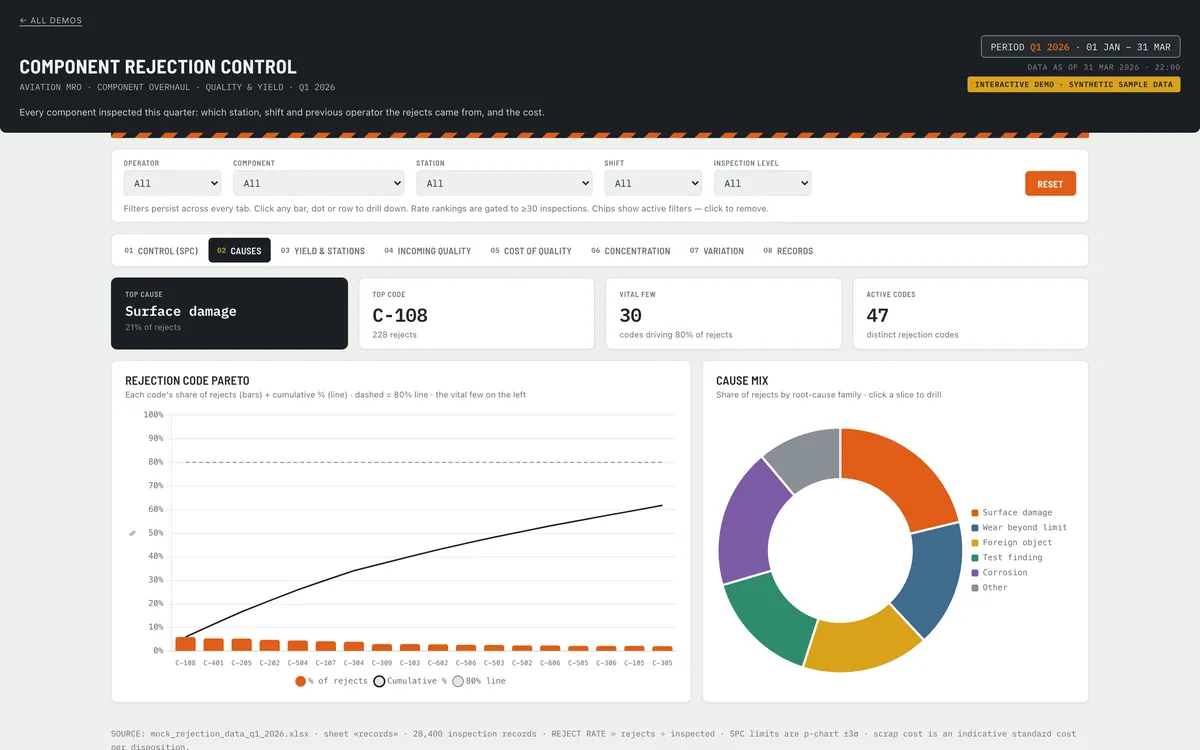
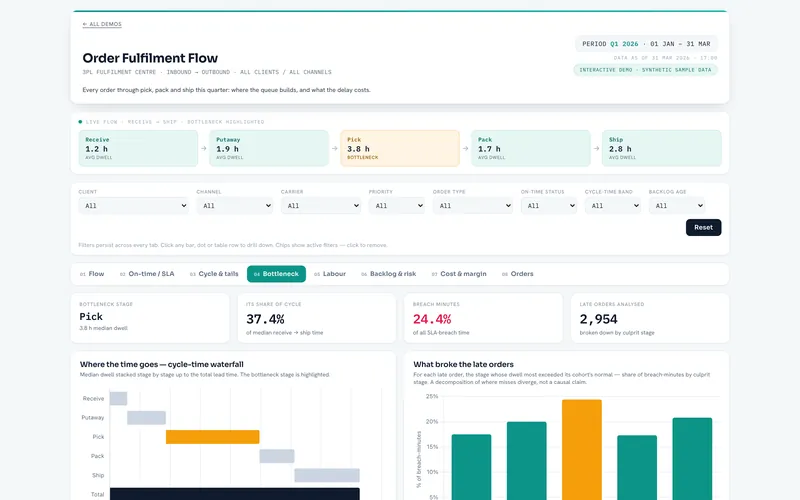
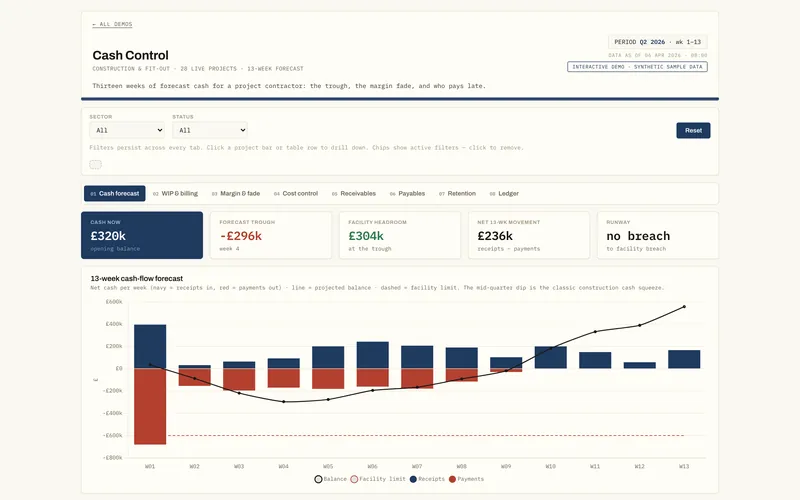
Leadership shouldn't need to open five tabs and chase three people to understand how things are going. I bring your CRM, project tools, finance system, and spreadsheets into one real-time view.

AI-assisted communications

Generate first drafts of investor updates, grant reports, or stakeholder communications directly from your live operational data. Your team edits a solid draft instead of staring at a blank page.

Not sure which of these fits your situation? Let's figure it out.

Is this a good fit?

This works best for a specific kind of organisation. Be honest with yourself — and I will be too.

Good fit if...

  • Your team is between 10 and 80 people
  • You have real operational complexity but no dedicated technical staff
  • At least one person on your team finds the current setup genuinely painful
  • You want systems that run themselves, not an ongoing consulting dependency

Probably not right if...

  • You're pre-revenue or still figuring out what your operation looks like
  • You already have an in-house engineering team who could build this
  • You need someone embedded full-time in your team as an employee

What a typical project looks like

Two of the most common engagement types. The scenarios reflect challenges impact organisations regularly bring to me — every real project is different, but these give you a sense of what's involved.

Impact reporting

Humanitarian technology NGO

15-person team, UK

The situation

The ops manager spent 2–3 days every month pulling data from Salesforce, Airtable, and a spreadsheet into a board report. It was always done under deadline pressure, frequently had errors, and required the same person every time.

What was built

An automated pipeline that pulls from all three sources on a schedule, formats the data consistently, and generates a structured draft ready for review and sign-off.

14 hrs

returned to the team every month

What took 2 days now takes an afternoon to review.

Onboarding automation

Community interest company

8-person team, regenerative food project

The situation

Getting a new volunteer through onboarding involved 4–5 emails back and forth, a manual CRM entry, and someone remembering to create the welcome tasks. It took up to two weeks and always fell to the same person.

What was built

An automated flow triggered by form submission: the CRM updates, a personalised welcome sequence sends, internal tasks are created, and the relevant team member is notified. No manual steps.

48 hrs

end-to-end, with zero manual input

Onboarding that previously took up to two weeks.

My commitment to every project

Scoped and priced upfront

You know exactly what you're getting and what it costs before any work starts. No surprise invoices.

Delivered in phases

You see working output at every stage. Not a big reveal at the end — progress you can see and respond to.

Done means working

I don't sign off a project until it's actually working in your hands. If something isn't right, we fix it.

How we work together

Simple, transparent, no surprises.

01
Free

Discovery Call

A 30-minute conversation about your organisation, your challenges, and where you spend the most time on things that could be automated. No preparation needed. Just come as you are.

02

Diagnosis & Proposal

I map your processes, identify the best opportunities, and send you a clear written proposal with options at different price points. You decide what to move forward with, or not at all.

03

Build & Hand Over

I build your automations, test them thoroughly, and hand them over with documentation your team can actually follow. You get full ownership: no vendor lock-in, no ongoing dependency on me.

Most projects are completed within 2–4 weeks. Ongoing retainers available for teams who want continued support.

Why impact businesses, specifically?

I've worked in and alongside mission-driven organisations long enough to know that the operational burden falls heaviest on the people who can least afford to carry it. Small teams doing outsized work, stretched across funding cycles, governance requirements, and stakeholder reporting. All while trying to deliver the actual programme.

The automation and AI tools available today are genuinely transformative. They can cut hours of weekly admin to minutes. But most people who know how to implement them are optimising ad spend for e-commerce brands, not helping a community interest company automate their volunteer matching process.

I work with impact-driven companies in the 10–80 person range. Organisations big enough to have real operational complexity, but without a dedicated technical team to solve it. Removing hours of repetitive work across that kind of team compounds fast.

That's the work I want to do.

Andrew Ryan

Why trust me with this?

A few things worth knowing.

LinkedIn ↗
Based in Lisbon, working across Europe

I work remotely with impact businesses across Europe. Async-first communication, clear documentation, and fixed-price proposals so you always know what you're paying.

Currently: humanitarian tech & regenerative communities

I'm designing AI implementation roadmaps for a humanitarian technology organisation — auditing processes and identifying where automation reduces operational overhead. Separately, I'm building operational systems for a regenerative community project: automated volunteer onboarding, a custom supplier discovery tool, and the event's core application.

Background in climate tech AI

My professional background is in building AI-powered data tools inside climate technology startups — complex, multi-source data problems that required both engineering capability and clear strategic thinking about what to build and why.

Taught data science to working professionals

I've taught data science and machine learning to non-engineers — which means I build things your team can actually understand, use, and maintain without depending on me.

Full-stack engineering

I build with LLM APIs (Claude, GPT), automation platforms (Make, n8n), API integrations, and full-stack development (Next.js, Python, databases). When off-the-shelf tools don't fit, I build custom.

Common questions

What if it doesn't deliver what you expected?

Every project is scoped and priced before any work starts. You know exactly what you're getting and what it costs. If something isn't working the way we agreed, we fix it. I don't sign off a project until it's actually working in your hands.

Fixed price

Agreed upfront. No surprise invoices at the end.

Phased delivery

You see working output at every stage, not just at the end.

Full ownership

All code, documentation, and access is yours. No lock-in.

Let's talk about your organisation

Book a free 30-minute discovery call. We'll look at where your team is losing the most time, whether automation can help, and what that might look like in practice.

Prefer email? hello@andrewryan.consulting